
Hello everyone,
Below is the summary of a research report found online, for your reference.
Based on the energy storage tenders I have seen in Latin America, combined with the report’s forecasts, I would venture a bold prediction: Latin American energy storage projects are about to take off.
The underlying logic is simple. Renewable energy projects across Latin America are booming, placing massive stress on the power grid. Only grid-scale energy storage can mitigate the impact of renewable generation on the grid — the alternative being thermal peaking. But thermal power is not prevalent in Latin America, and it runs counter to the overarching decarbonization goals, so energy storage has effectively become the only viable option.
Latin America’s energy storage market is entering a phase of rapid and sustained expansion. According to Wood Mackenzie’s Latin America Energy Storage Outlook 2026, the region’s cumulative installed energy storage capacity is projected to grow from 2.5 GW in 2025 to 34 GW by 2035, representing a compound annual growth rate (CAGR) of 30%. Accelerating tender activity, rising renewable curtailment, and transmission infrastructure that has yet to be modernized are the primary drivers of this growth.
Pamela Morales of Wood Mackenzie commented: “Latin America is no longer a frontier market for energy storage — it is an active market. The project pipeline is growing rapidly, but without a well-established regulatory framework and clear compensation mechanisms, project deployment will stall.”
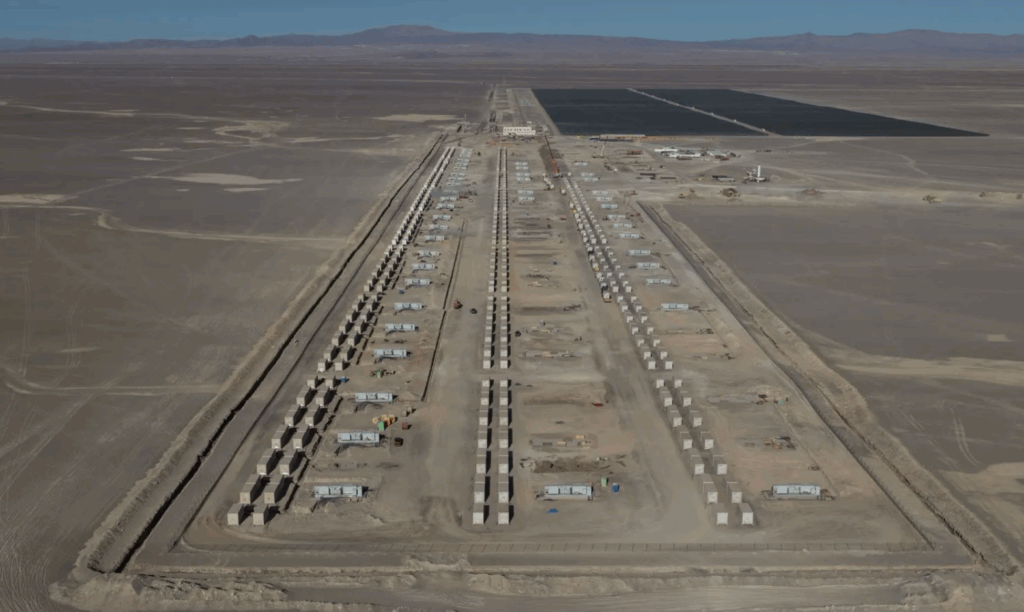
Chile remains the region’s leading market, home to the largest operational battery energy storage system (BESS) project in Latin America. High curtailment levels continue to drive investment in long-duration energy storage. However, as more storage capacity enters the market, price cannibalization in Chile’s northern grid is emerging as a growing risk, gradually eroding the arbitrage revenues of storage projects.
Mexico’s energy storage market is at a policy-driven inflection point. Recently introduced support mechanisms — including a first round of priority project solicitations, as well as joint development solicitations with the Federal Electricity Commission (CFE), both of which mandate storage co-location — are expected to award more than 3 GW of storage capacity by 2030.
Brazil’s energy storage market is poised for a major step forward. A dedicated BESS auction scheduled for December 2026 is set to drive new installed capacity starting in 2028. However, in the absence of a clear remuneration mechanism, project financing will remain challenging in the near term.
Argentina has rapidly built a standalone energy storage market through its auction process. Recent auction rounds have awarded a total of 1.3 GW of standalone storage capacity. These projects are scheduled to come online starting in 2027, providing critical support to the transmission system.
The Dominican Republic has the most well-developed regulatory framework in the Caribbean. A mandate requiring storage capacity equal to 50% of installed solar PV capacity is driving near-term project deployment, with the government targeting 500 MW of installed storage capacity by 2030.
Across Latin America, storage deployment remains constrained by the lack of bankable revenue mechanisms and clear regulatory frameworks. Most markets have yet to define compensation mechanisms for ancillary services and energy arbitrage, making it difficult to secure long-term project bankability. Limited access to financing, permitting delays, and a small pool of offtakers further compound the challenge.
Morales concluded: “To sustain market growth, Latin America still needs to strike the right balance between mandates and incentives. Countries that establish bankable revenue mechanisms will attract the investment needed to sustain market growth, propelling it well beyond the current policy-driven wave. The next decade will separate the markets that merely announce capacity targets from those that actually deliver on them.”